Mouth Tape for Sleep: Does It Actually Work in 2026?
Does mouth taping for sleep really work, or is it a trend? Here's what the science says, who should skip it, and the best mouth tape for 2026.
Mouth Tape for Sleep: Does It Actually Work in 2026?
Mouth tape for sleep blew up online, with people claiming it cured their snoring, dry mouth, and morning grogginess overnight. If you are wondering whether taping your mouth shut at night is genuinely helpful or just another viral trend, this guide gives you the honest answer, including the important safety warnings most videos skip.
The short version: mouth taping can help a specific group of people, but it is not for everyone, and for some it can be risky. Let’s break down who it actually helps.
TL;DR: Quick Verdict
Mouth taping is designed to encourage nasal breathing during sleep. For healthy people who breathe through their mouth out of habit, it may reduce snoring, dry mouth, and morning throat irritation. It is not a treatment for sleep apnea, and anyone with breathing problems, nasal congestion, or a heart condition should talk to a doctor first. If you do try it, use a purpose-made porous strip like Hostage Tape, Dryft, or a hypoallergenic option, never duct tape or packing tape.
What Is Mouth Taping Supposed to Do?
The idea is simple. When you sleep with your mouth open, you breathe through your mouth instead of your nose. Nose breathing filters, warms, and humidifies air, and it encourages slower, steadier breaths.
Mouth breathing at night is linked to a few common annoyances:
- Dry mouth and a sore throat in the morning
- More snoring
- That cotton-mouth, groggy feeling on waking
Mouth tape holds your lips gently closed so your body defaults to nasal breathing. The American Academy of Sleep Medicine and other sleep experts generally agree that nasal breathing is preferable for most people, but they also caution that taping the mouth is not a proven medical treatment and can be unsafe for the wrong person.
Does the Science Actually Support It?
Here is where honesty matters. The evidence for mouth taping is limited and early. A few small studies have looked at mouth taping in people with mild snoring or mild sleep apnea and found modest improvements, but these were small samples and not the final word.
What we can say fairly:
- For otherwise healthy mouth-breathers, many report less snoring and less dry mouth, and the downside risk is low.
- The dramatic claims about curing anxiety, reshaping your jaw, or fixing serious sleep disorders are not supported by strong evidence.
- Mouth taping is best thought of as a low-cost experiment, not a medical device.
If your main problem is snoring plus daytime exhaustion, gasping, or pauses in breathing, that could be sleep apnea, and tape is the wrong tool. See a doctor for a proper evaluation.
Who Should NOT Use Mouth Tape
This is the part the viral videos leave out, so read it carefully.
Do not use mouth tape if you:
- Have or might have obstructive sleep apnea
- Get frequent nasal congestion, allergies, or a deviated septum that blocks nose breathing
- Have a heart or lung condition
- Have been drinking alcohol or taking sedatives
- Are prone to vomiting or acid reflux at night
- Are a young child
If you cannot breathe comfortably through your nose while awake with your mouth closed for a couple of minutes, taping it shut at night is not safe. Fix the nasal blockage first.
How to Try Mouth Taping Safely
If you are a good candidate and want to test it, do it gradually.
- Practice while awake. Wear the tape for 10 to 15 minutes during the day to make sure you can breathe easily and stay calm.
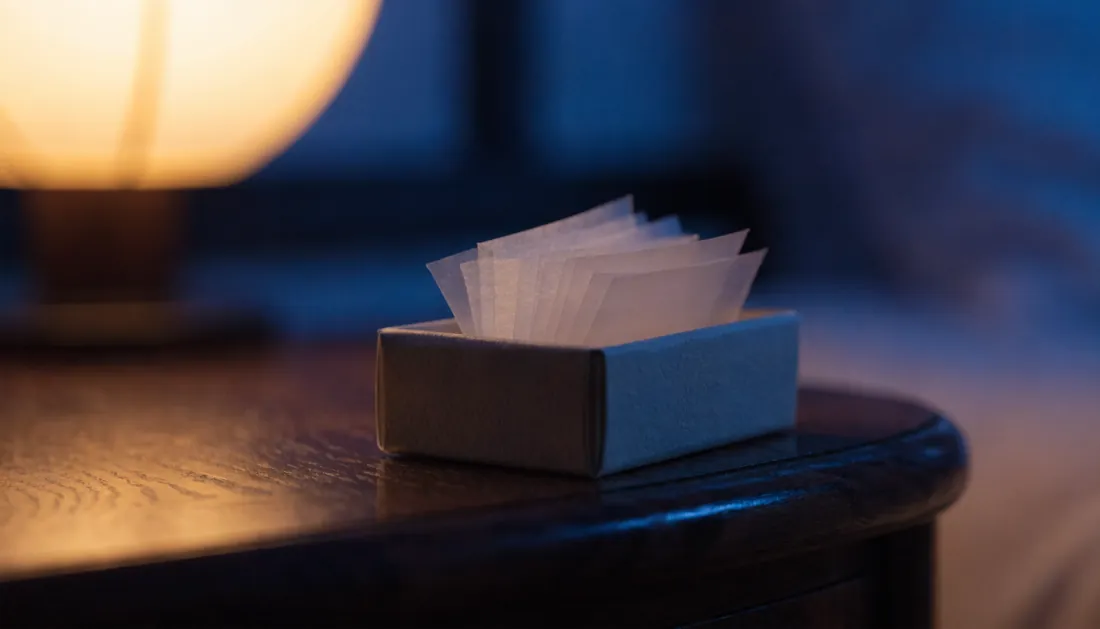
- Use the right product. A porous, skin-safe strip is designed to peel off easily if needed. Never use strong adhesive tape.
- Start with a partial approach. Some people begin with a small vertical strip in the center of the lips rather than sealing the whole mouth.
- Stop if it feels wrong. Any panic, difficulty breathing, or skin irritation means stop.
Pairing better breathing with a calmer bedroom also helps. If snoring or restlessness is your issue, our guide to white noise machines for sleep covers tools that mask sound and help both you and your partner rest.
The Best Mouth Tape Products for 2026
If you decide to try it, use tape made for the job.
1. Hostage Tape (around $25 to $30 for a monthly supply)
The most recognized brand in the category. It uses a single full-mouth patch with a gentle adhesive and a small breathing gap. Popular with people who move a lot in their sleep because it stays put.
2. Dryft Sleep Strips (around $20 to $25)
A lighter, more minimal strip that many first-timers prefer because it feels less sealed and is easier to remove. Good starting point.
3. SomniFix Strips (around $22 to $28)
These use a small central vent, so your mouth is not fully sealed, which eases the claustrophobic feeling. A reasonable middle option.
4. 3M Micropore Tape (around $5 to $8)
The budget, minimalist route that many people use. It is a hypoallergenic medical paper tape you apply as a small vertical strip. Cheap and gentle, though less convenient than purpose-made patches.
Comparison Table
| Product | Approx. Price | Style | Best For |
|---|---|---|---|
| Hostage Tape | $25-$30/mo | Full-mouth patch | Active sleepers |
| Dryft | $20-$25 | Light strip | First-timers |
| SomniFix | $22-$28 | Vented patch | Claustrophobia-prone |
| 3M Micropore | $5-$8 | Paper tape strip | Budget, sensitive skin |
Prices change, so use these as rough guides.
Realistic Expectations
If mouth taping works for you, you will probably notice it within a week or two: less dry mouth, quieter nights, and waking up feeling a little less foggy. If you notice nothing after two weeks, it is likely not your problem, and something else is disrupting your sleep.
Mouth taping is one small lever. It works best alongside the bigger fundamentals like a consistent schedule and a cool, dark room. For that foundation, start with proven sleep habits and routines.
FAQ
Q: Is mouth taping safe? It can be safe for healthy people who breathe well through their nose. It is not safe for anyone with sleep apnea, nasal blockage, heart or lung conditions, or after alcohol or sedatives. Check with a doctor if you are unsure.
Q: Does mouth tape stop snoring? It may reduce snoring caused by mouth breathing, but snoring from other causes, including sleep apnea, will not be fixed by tape. If snoring comes with daytime fatigue, get evaluated.
Q: What tape should I use for mouth taping? Use a porous, skin-safe product made for sleep, such as Hostage Tape, Dryft, SomniFix, or hypoallergenic 3M Micropore. Never use household tape.
Q: How long does it take to see results? Most people who benefit notice a difference within one to two weeks. If nothing changes, mouth breathing likely was not your main issue.
Q: Can mouth taping help with sleep apnea? No. Mouth taping is not a treatment for sleep apnea and can be dangerous for people who have it. Apnea needs proper medical care, often a CPAP machine or other prescribed therapy.
Final Recommendation
Mouth taping is a cheap, low-tech experiment that genuinely helps a subset of people, mainly healthy habitual mouth-breathers who snore or wake up with a dry mouth. It is not magic, and it is not safe for everyone. If you are a good candidate, start with a light option like Dryft or a small strip of 3M Micropore, practice while awake first, and stop if anything feels off. If your snoring comes with real exhaustion or gasping, skip the tape and see a doctor. Tape can quiet a symptom, but it cannot treat a serious sleep disorder.
Written by
Sleep Team
We are an independent team that researches sleep products and the science behind them, then writes honest, practical guides. We are not doctors, and our content is general information, not medical advice.